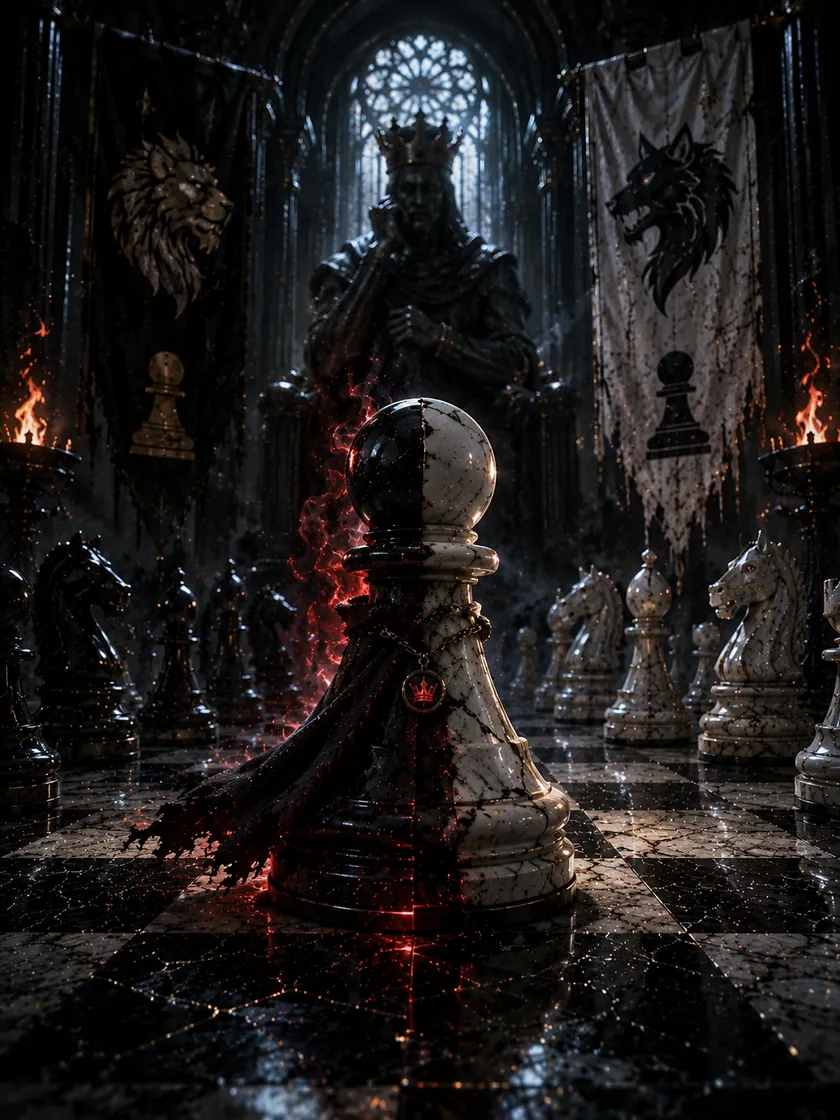
Traitor Piece
← Mutation index

Main mutator · Unlock level 35

Traitor Piece

After your 10th move, one pawn on the affected side changes to the other color. It then moves as that color’s pawn and cannot move two squares on its first move. If no pawn can change safely, it waits until one is available.

Difficulty: hardAppears in: 2 levelsOn a repeating move cadence

Rule variants

Base and Extra, kept distinct.

A campaign Extra variant changes the main mutator rule. It is separate from an additional side mutator.

Base variant

Main mutator

After your 10th move, one pawn on the affected side changes to the other color. It then moves as that color’s pawn and cannot move two squares on its first move. If no pawn can change safely, it waits until one is available.

Detailed rule

After your 10th move, one pawn on the affected side changes to the other color. It then moves as that color’s pawn and cannot move two squares on its first move. If no pawn can change safely, it waits until one is available.

Extra variant

Changed main rule

After your 8th move, one pawn on the affected side changes to the other color. It then moves as that color’s pawn and cannot move two squares on its first move. If no pawn can change safely, it waits until one is available.

Detailed rule

After your 8th move, one pawn on the affected side changes to the other color. It then moves as that color’s pawn and cannot move two squares on its first move. If no pawn can change safely, it waits until one is available.

Conquest

Affected side: Your side

After your 8th move, one pawn on your side changes to the other color. It then moves as that color’s pawn and cannot move two squares on its first move. If no pawn can change safely, it waits until one is available.

Domination

Affected side: Enemy side

After your 8th move, one pawn on the enemy changes to the other color. It then moves as that color’s pawn and cannot move two squares on its first move. If no pawn can change safely, it waits until one is available.

Strategy notes

Turn the constraint into a lever.

Plan around it

  • Keep your pawns flexible so a safe defection target stays available.
  • Assume the other side may gain a permanent pawn foothold at the cadence boundary.

Keep in mind

  • Only pawns can defect.
  • The defection does not consume a turn and never appears in move history.